 Skip-the-line available
 The Gardens of the Reggia di Venaria: A Walking Guide
How the 60-hectare gardens are laid out — the Potager Royal, Penone's contemporary sculptures, the Water Canal and the La Mandria park beyond.
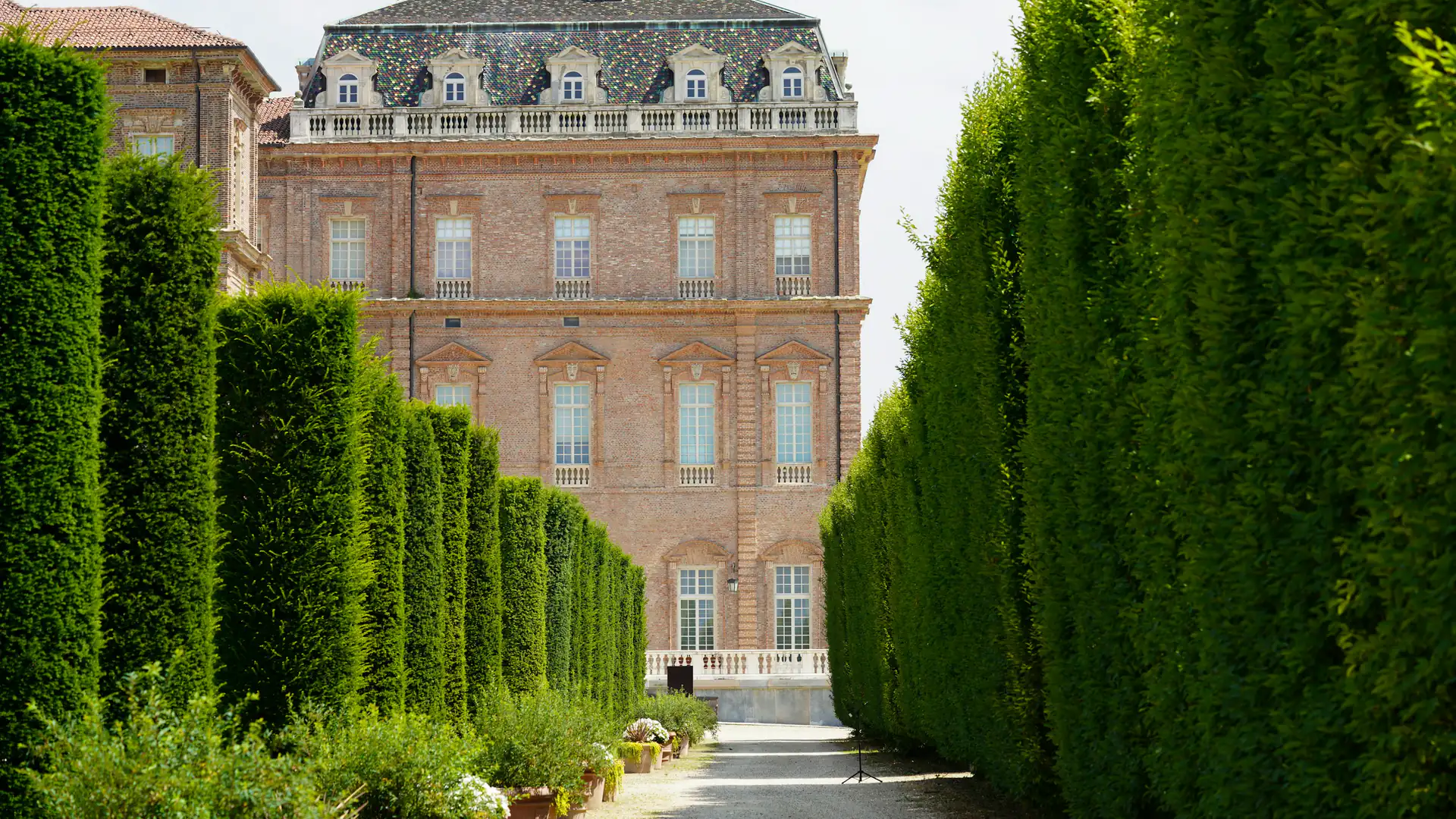
The gardens are half the reason to come to Venaria. Covering roughly 60 hectares behind the palace, they are among the most spectacular royal gardens in Italy — not a single formal parterre but a layered landscape that mixes restored 17th-century design with bold contemporary art. The original Baroque gardens, with their fountains and theatrical waterworks, were largely destroyed under Napoleon, so what you walk today is the product of the great restoration completed in 2007, which re-imagined the grounds rather than slavishly copying a lost original. The result is the long Water Canal and the Potager Royal — the largest royal kitchen garden in Italy — set alongside Giuseppe Penone's three-hectare Garden of Fluid Sculptures, with the forests of the adjoining La Mandria park stretching to the horizon. This guide explains the layout, the highlights, and how much time the grounds really deserve.
How the Gardens Are Laid Out
The gardens unfold behind the palace and are best understood as two registers laid over each other: the geometry of the restored Baroque design and a layer of contemporary intervention. The defining axis is the long, straight Water Canal that draws the eye away from the palace into the distance, punctuated by the 17th-century grottoes, the remains of Castellamonte's Fountain of Hercules and the Temple of Diana. This central spine organises the whole composition, so a good first move on entering the gardens is to walk the main axis to grasp the scale before exploring the side areas — the views open far into the distance, out toward La Mandria's woods and, on clear days, the Alps.
The Lower Park is where most of the highlights concentrate. Here you'll find the great water expanse of the Peschiera (the Pond), the grottoes, the orchards and vegetable plots of the Potager Royal, and Penone's Garden of Fluid Sculptures. Because the original gardens were lost under Napoleon, what you see is a 21st-century re-creation completed for the 2007 reopening rather than a surviving Baroque garden — an important distinction that explains the unusual blend of historic geometry and modern art. The grounds are large and largely open, so a route that follows the central canal and loops through the Lower Park covers the essentials without backtracking. Because the grounds are flat and the main axis is dead straight, orientation is easy once you've found the canal, and you rarely need a map beyond the first few minutes.
The Potager Royal and the Historic Features
The Potager Royal is the showpiece of the working gardens — the largest royal kitchen garden in Italy, combining orchards, vegetable beds and fruit cultivation in a productive landscape that was once part of court life and is now a highlight of the visit. It comes into its own from late spring through summer, when the planting fills out, and it's a particular favourite with families and anyone who appreciates the practical side of a royal estate alongside the ornamental grandeur. Even out of season its structure and scale are impressive. The geometric beds and trained fruit trees hold their shape through the year, so even a winter walk past the Potager rewards the eye, and in high summer the contrast between productive plots and ornamental parterre is one of the gardens' quiet pleasures.
Scattered through the grounds are the surviving and restored historic features that anchor the gardens to their Baroque past. The Fountain of Hercules, a 17th-century masterpiece by Amedeo di Castellamonte, survives in part along the Water Canal, while the 17th-century grottoes and the Temple of Diana mark the long central axis. Closer to the palace, the Court of Honour holds the Fountain of the Stag and its water-theatre staging, the dramatic link between the formal courtyard and the open gardens beyond. Together these features trace what the original 17th- and 18th-century gardens aimed for — theatrical waterworks and sculptural set-pieces designed to impress a court — even where the restoration has reinterpreted rather than reconstructed them.
Contemporary Art: Penone's Garden of Fluid Sculptures
The boldest part of the gardens is contemporary. The Garden of Fluid Sculptures, created by the celebrated Italian artist Giuseppe Penone between 2003 and 2007, comprises fourteen works spread over about three hectares of the Lower Park — bronze trees, fountains and groves that re-interpret the complexity of the lost Baroque garden in a modern idiom. Penone took the historic outline of Venaria's Lower Park and its centuries of garden history as his starting point, aiming to recreate the entanglement of vegetation, sculpture and water that had once filled these grounds and then disappeared. Rather than reconstructing what was lost, he set out to evoke its spirit — bronze that mimics living wood, water that traces forms the old fountains once held.
The effect is to fuse old and new: rather than a museum reconstruction, the gardens offer a dialogue between the 17th-century framework and Penone's 21st-century vegetal sculptures, which sit naturally among the trees and water. This is part of what makes a Venaria garden visit distinctive — few historic royal gardens carry a permanent contemporary-art commission of this stature integrated so directly into their fabric. For visitors interested in art as well as history, the Fluid Sculptures are a genuine destination in their own right, and they reward slow walking and repeat looks as the light and your angle change. Set among real trees and open water, the bronzes can take a moment to register as art at all, which is precisely the effect Penone intended — a garden that blurs the line between the planted and the sculpted.
La Mandria Park and How Much Time to Allow
Beyond the formal gardens lies the vast Park of La Mandria, the former Savoy hunting reserve and today one of the largest fenced nature parks in Europe. Established as a regional park in 1978, it protects a large estate — historically around 3,600 hectares enclosed by a 35-km wall, with roughly 3,000 hectares of protected land — criss-crossed with walking and cycling trails and home to varied wildlife and woodland. Within it stands the Castello della Mandria, the smaller residence about 2.5 km from the Reggia where King Victor Emmanuel II later lived. La Mandria is a separate experience from the palace gardens — wilder, more about nature and walking than formal design.
For timing, plan a half-day — around 3.5 to 4 hours — for the Reggia and its gardens together, giving the 60 hectares enough time that you're not rushing the central canal, the Potager Royal and the Penone sculptures. If you want to add the Castello della Mandria and a walk in the La Mandria park, budget a full day: the castle is a separate 2.5-km hop across the estate and the park itself is large enough to absorb hours of walking or cycling. Wear comfortable shoes — the gardens are extensive and the paths run on gravel and grass — and bring sun protection and water in summer, as the open grounds offer little shade.
Frequently asked
How big are the gardens at the Reggia di Venaria?
The formal gardens cover roughly 60 hectares behind the palace, among the most spectacular royal gardens in Italy. Beyond them lies the much larger Park of La Mandria, a former Savoy hunting reserve of around 3,000 protected hectares.
What is the Potager Royal at Venaria?
The Potager Royal is the estate's royal kitchen garden — the largest in Italy — blending orchards, vegetable beds and fruit cultivation. It's at its fullest from late spring through summer and is a favourite with families and anyone drawn to the working side of a royal estate.
Is there contemporary art in the Venaria gardens?
Yes. The Garden of Fluid Sculptures by Italian artist Giuseppe Penone (2003–2007) comprises fourteen works — bronze trees, fountains and groves — across about three hectares of the Lower Park, re-interpreting the lost Baroque garden in a modern idiom.
Are the original Baroque gardens still there?
Not as originally built. The elaborate 17th- and 18th-century gardens were largely destroyed during the Napoleonic occupation. What you walk today is a re-imagined landscape completed for the 2007 reopening, blending restored historic geometry with contemporary art.
What is the La Mandria park?
La Mandria is the former Savoy hunting reserve adjoining the estate — established as a regional park in 1978 and one of Europe's largest fenced nature parks, with trails for walking and cycling. It also contains the Castello della Mandria, about 2.5 km from the Reggia.
How much time should I allow for the gardens?
Allow a half-day (about 3.5 to 4 hours) for the Reggia and gardens together. Budget a full day if you also want to visit the Castello della Mandria and walk in the La Mandria park, which is a separate site across the wider estate.
What should I wear to walk the gardens?
Comfortable walking shoes — the gardens are extensive with gravel and grass paths. Bring sun protection and water in summer, as the open grounds offer little shade, and a warm layer in winter when the planting is dormant and the citrus is stored indoors.