 Skip-the-line available
 The Best Time to Visit the Reggia di Venaria Reale
Season-by-season planning for the gardens in bloom, the year-round interiors, the Monday closure and the quietest hours to visit Venaria.
The Reggia di Venaria rewards different visitors in different seasons. The 60-hectare gardens — the Potager Royal, Giuseppe Penone's Garden of Fluid Sculptures, the long Water Canal — are a spring-and-summer spectacle, abloom from roughly April and at their fullest from May into September. The palace interiors, by contrast, are weatherproof and just as compelling in January as in July: Juvarra's Great Gallery floods with light on a clear winter morning. Turin and the surrounding Piedmont plain run hot and humid in high summer and can turn bitterly cold, occasionally snowy, between December and February, which shapes how long you'll want to spend outdoors. Add the firm weekly rhythm — the entire estate closes every Monday except public holidays — and the choice of day matters as much as the choice of month. This guide maps the seasons, the weather, and the weekly flow so you can match your visit to what you actually want to see.
The Gardens in Bloom Versus the Year-Round Interiors
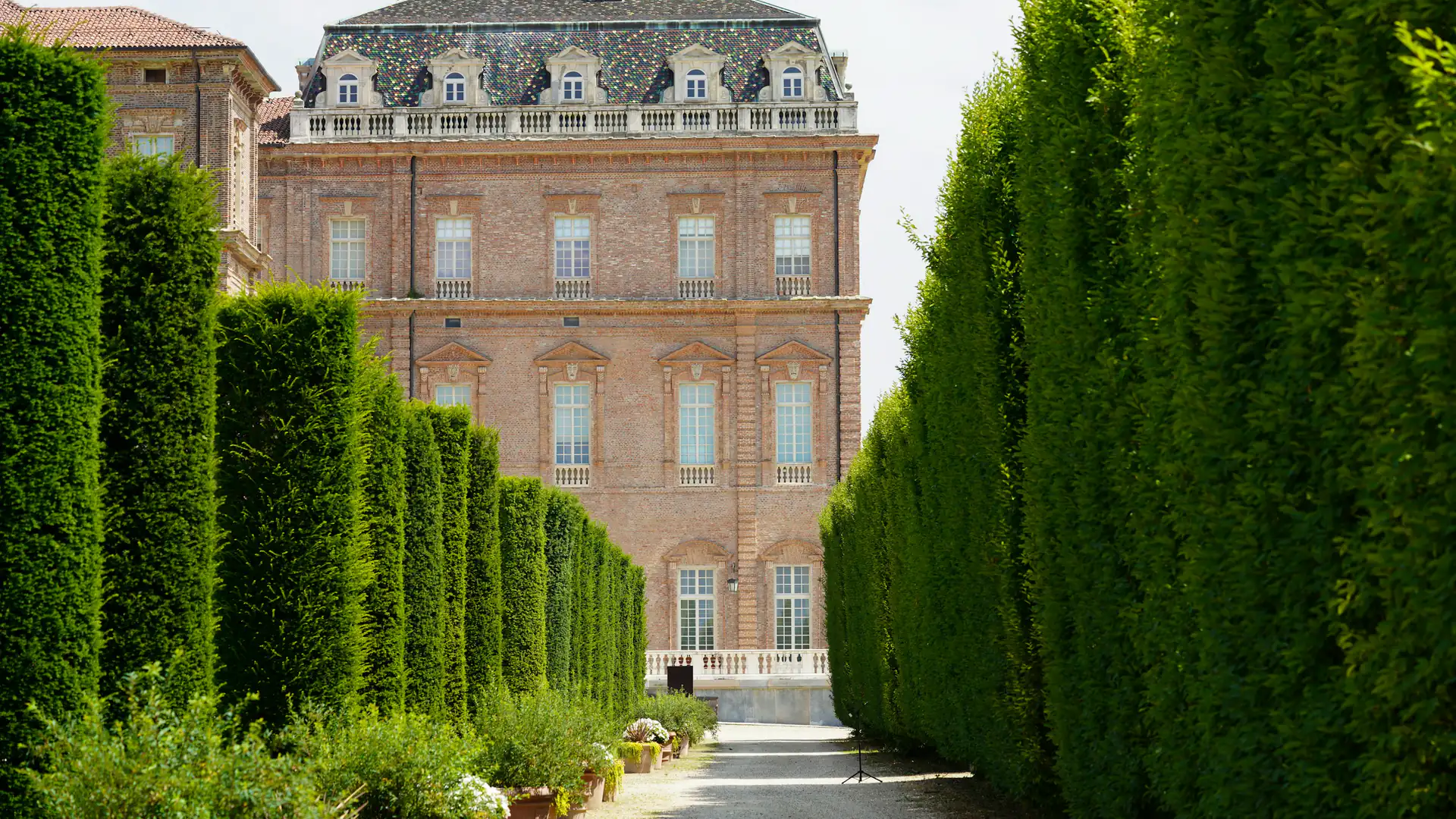
The single biggest seasonal variable at Venaria is the gardens. The Lower Park holds the largest Potager Royal (royal kitchen garden) in Italy, the long straight Water Canal, the 17th-century grottoes, and the three-hectare Garden of Fluid Sculptures created by contemporary artist Giuseppe Penone between 2003 and 2007. These outdoor spaces are at their richest from late spring into early autumn: orchards and vegetable beds fill out, the fountains run, and the long sightlines stretch from the parterres toward the forests of La Mandria and the distant Alpine peaks. Late spring — roughly May into June — is the sweet spot, with the gardens abloom, clearer skies, and crowds not yet at their August peak. In winter the planting is dormant and the citrus is moved indoors to the Citroniera, so a December garden walk is more about architecture and structure than colour.
The palace interiors run on a completely different clock. The Theatre of History and Magnificence route — the Hall of Diana, the Great Gallery, the Church of Sant'Uberto, the Juvarra Stables with the Bucentaur barge — is entirely indoors and unaffected by weather, which makes the Reggia a strong cold-weather or rainy-day choice when much of Piedmont's outdoor sightseeing is washed out. Juvarra's Great Gallery, with its 44 arched windows and black-and-white tiled floor, is arguably most striking on a crisp, clear winter morning when low sun rakes down the colonnade. If your priority is the interiors and the permanent displays, almost any open day works; if it's the gardens, weight your trip toward April–September and accept that the indoor route is a bonus rather than the main event.
Season by Season: Weather and What to Expect
Spring (April–June) is the consensus best window. The gardens come into bloom, daytime temperatures are mild, and the skies over the Turin plain have a good chance of clearing — without the dense crowds and heat of high summer. This is when the Potager Royal and the parterres look their best and a full half-day outdoors is comfortable. Late spring in particular gives you the clearest shot at the long garden sightlines that run toward the forests of La Mandria and, on a settled day, the Alpine peaks beyond. Autumn (September–October) is the close runner-up: the planting still holds, the light softens, and visitor numbers ease after the August peak. Both shoulder seasons let you walk the 60 hectares of gardens and the indoor Theatre of History route in one unhurried day without having to rush either half of the visit.
Summer (July–August) brings hot, humid weather to Turin and the surrounding plain; come with light clothing, water, and a sun plan for the largely shadeless gardens, and lean on early-morning slots before the heat builds. It is also the busiest stretch and the season of evening programming — the estate runs 'Summer nights at the Reggia' events in late July and early September, when the grounds open into the evening. Winter (December–February) can be genuinely cold and occasionally snowy, which makes it the interiors' season: the Great Gallery and the permanent displays are warm, dry and uncrowded, while the dormant gardens are quieter and more architectural than floral. A warm layer is sensible — the long Gallery can feel chilly even on a bright day.
The Weekly Rhythm: Mondays Closed, Weekends Busiest
The most important date rule at Venaria is simple: the entire estate — Reggia, Gardens and the Castello della Mandria — is open Tuesday to Sunday and closed every Monday, with the exception of public holidays that fall on a Monday. Tickets are not valid on closed days, and Christmas Day and New Year's Day are also typically closed. If your Turin itinerary only leaves a Monday free for Venaria, you'll need to rearrange — there is no workaround on a standard closed Monday, and turning up on one means a wasted trip out from the city. Because the gardens, the palace and the La Mandria castle all keep the same closed day, you can't split a Monday across part of the estate either. Building the visit around a Tuesday-to-Friday window is the safest way to avoid both the closure and the worst of the crowds.
Across the open week, weekends and public holidays draw the heaviest footfall, especially Saturday and Sunday afternoons when day-trippers from Turin and the wider region arrive. Weekday mornings are noticeably calmer. A practical pattern for international visitors: take an early slot on a Wednesday, Thursday or Friday, do the indoor Theatre of History route first while it's quiet, then spend the rest of the day spreading out across the gardens, which absorb crowds far more easily than the palace corridors. If you can only come at a weekend, an early-morning entry beats an afternoon one for both quiet and light. Aim to be at the gate close to opening, and you'll have the indoor route to yourself before the coach groups and local families arrive in force.
Opening Hours, Closures and Evening Events
Opening hours at Venaria vary by season and by what you want to see, and the gardens and palace can keep slightly different schedules. As a general frame, the estate opens from mid-morning, with the ticket offices closing about an hour before the posted closing time, so a late-afternoon arrival can mean you've missed last admission even though the gates are still open. Because the precise daily hours shift through the year — and around special exhibitions and events — it's worth confirming the exact times for your date before you travel rather than assuming a fixed timetable.
Venaria also programmes seasonal evening and special-event openings that can change the rhythm of a visit. In 2026 these include 'Summer nights at the Reggia' (late July to early September), the long-day 'From dawn to dusk' event around the summer solstice on 21 June, and a rotating exhibition calendar — for example 'Queens on Stage' opening in April 2026. These events can extend hours into the evening and add atmosphere, particularly in the gardens, but they can also mean busier grounds. If you're choosing a date partly for one of these events, check what's running and whether it affects standard admission, as event days occasionally carry their own access arrangements.
Frequently asked
What is the best month to visit the Reggia di Venaria?
Late spring — roughly May into June — is the strongest all-round choice: the gardens are in bloom, the weather is mild, skies often clear, and the heaviest summer crowds haven't yet arrived. September and October are close behind.
Is the Reggia di Venaria open on Mondays?
No. The whole estate — Reggia, Gardens and the Castello della Mandria — is open Tuesday to Sunday and closed every Monday, except when Monday is a public holiday. Christmas Day and New Year's Day are also typically closed.
Is Venaria worth visiting in winter?
Yes, especially for the interiors. The Theatre of History and Magnificence route, including Juvarra's Great Gallery, is fully indoors and uncrowded in winter. The gardens are dormant and the citrus is stored indoors, so winter favours architecture over blooms. Bring a warm layer.
What are the quietest days and times to visit?
Weekday mornings, particularly Wednesday to Friday, are the calmest. Saturday and Sunday afternoons are the busiest. An early entry lets you walk the indoor route before the day-trippers arrive, then spread out across the gardens.
When are the gardens at their best?
From roughly April through September. The planting fills out in late spring, the Potager Royal and parterres look their fullest in early summer, and the long sightlines toward La Mandria and the Alps are clearest in settled spring and autumn weather.
Does the Reggia di Venaria have evening or special events?
Yes. Seasonal programming includes 'Summer nights at the Reggia' in late July to early September and the 'From dawn to dusk' solstice event around 21 June, alongside a rotating exhibition calendar. These can extend hours and add atmosphere, especially in the gardens.
How long should I allow for a visit?
Plan a half-day (about 3.5 to 4 hours) for the Reggia and Gardens. Allow a full day if you also want to see the Castello della Mandria, which is a separate site about 2.5 km away across the estate.