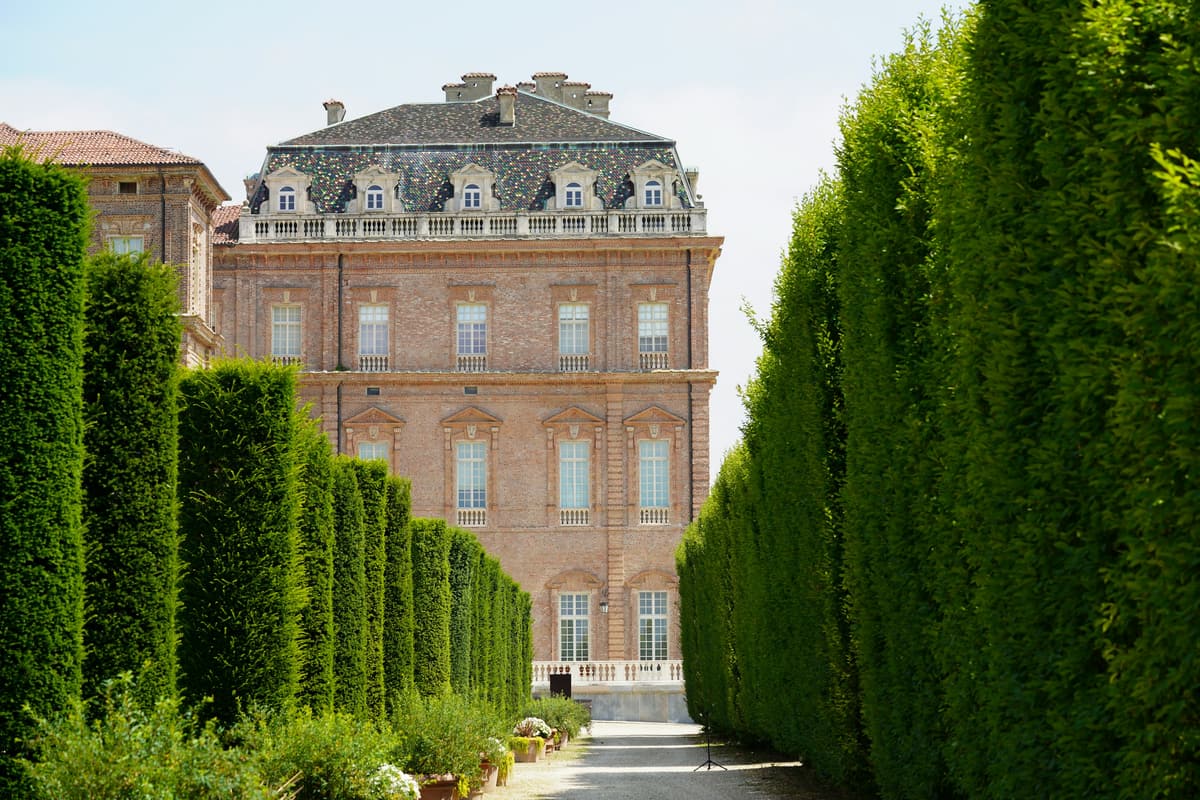
The Reggia di Venaria Reale is the largest of the Savoy royal residences and one of the great Baroque palaces of Europe. Duke Charles Emmanuel II of Savoy commissioned it in 1658 as a hunting palace; over the following century it grew into a colossal Baroque residence rivalling Versailles, designed by Amedeo di Castellamonte, Michelangelo Garove, and most famously Filippo Juvarra, whose 80-metre Galleria Grande (often called the Galleria di Diana) is the building's signature room.
The complex covers roughly 80,000 square metres of palace, 60 hectares of formal gardens, and the adjacent La Mandria park — once the royal hunting reserve, now a regional park containing the Castello della Mandria, the smaller residence where Victor Emmanuel II later lived with his second wife Rosa Vercellana. The Reggia and Castello della Mandria sit about 2.5 kilometres apart and are most easily seen together over a full day.
UNESCO inscribed Venaria in 1997 as part of the serial site "Residences of the Royal House of Savoy" (#823), which groups the major Savoy palaces around Turin under a single World Heritage listing. The Reggia's restoration — completed in 2007 after one of the largest cultural restoration projects in modern European history — turned the complex from a decaying ex-military barracks back into a working royal palace open to the public.
For international visitors, Venaria pairs naturally with central Turin: 13 minutes by SFM commuter train from Torino Porta Susa to Reggia di Venaria station, then a 500-metre walk via Via Andrea Mensa. Most foreign visitors arrive as a half-day or full-day trip from a Turin hotel; the rest of Turin's Savoy heritage — Palazzo Reale, Palazzo Madama, Stupinigi — is included in the same UNESCO inscription and worth pairing if you have more than one day in Piedmont.